
Morocco Natural Landscapes: A Guide to Desert, Mountains, Coast & Valleys
Morocco natural landscapes are remarkably diverse. In a single journey, travelers can move from Atlantic beaches to cedar forests, cross the snow-dusted Atlas Mountains, follow palm-filled valleys and finish among the golden dunes of the Sahara. This variety is one of the country’s greatest strengths: nature is not a separate attraction in Morocco, but part of the road between its cities, villages and historic sites.
This guide introduces the country’s most memorable natural regions, explains where to experience them and helps first-time visitors combine coast, mountains, desert and valleys without turning the trip into a race.
Why Morocco’s Landscapes Are So Diverse
Morocco sits between the Atlantic Ocean, the Mediterranean Sea and the Sahara, while the Rif and Atlas mountain systems create major changes in altitude and climate. That geography produces a striking range of environments: fertile northern hills, high mountain passes, cedar forests, rocky plateaus, palm oases, Atlantic cliffs and immense desert horizons. Seasonal differences matter too. Mountain areas can be cold or snowy in winter while southern desert regions remain dry and sunny; coastal destinations are moderated by ocean air.
1. The Sahara Desert: Dunes, Oases and Open Horizons
For many travelers, the Sahara is the most iconic of Morocco’s natural landscapes. The best-known dune field is Erg Chebbi beside Merzouga, where high orange-gold dunes rise dramatically beyond the desert villages. Sunrise and sunset transform the colors of the sand, while clear nights can reveal exceptional stars away from city lights.
A desert stay can include a camel ride, a 4×4 excursion, sandboarding, visits to nearby communities and an overnight camp. The experience is not only about dunes: the routes toward the Sahara pass through arid plateaus, palm oases and traditional settlements that show how people have adapted to the environment for generations.
Merzouga and Erg Chebbi
Merzouga is the easiest choice for first-time visitors who want impressive dunes and a wide selection of camps and desert activities. It combines naturally with Fes, the Middle Atlas, Todra Gorge, Dades Valley and Ouarzazate on a multi-day road journey. For practical planning, see our Merzouga Sahara Desert Travel Guide.

The golden dunes of Erg Chebbi are among Morocco’s most iconic desert landscapes.
M’Hamid and Erg Chigaga
Farther southwest, M’Hamid is a gateway to the more remote Erg Chigaga region. Reaching the larger dune areas generally requires off-road travel, which gives this part of the desert a more isolated feel. It is particularly suitable for travelers building a southern route through Zagora and the Draa Valley.
2. The Atlas Mountains: Morocco’s Dramatic Backbone
The Atlas Mountains shape both Morocco’s scenery and many of its classic travel routes. The system includes the High Atlas, Middle Atlas and Anti-Atlas, each with a different character. Roads climb through mountain passes, descend into fertile valleys and connect Amazigh villages whose architecture and agriculture reflect the terrain.
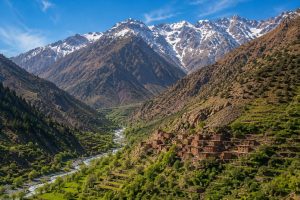
The High Atlas brings dramatic peaks, valleys and Amazigh villages to central Morocco.
High Atlas and Mount Toubkal
The High Atlas contains Mount Toubkal, North Africa’s highest peak at 4,167 metres. Imlil is a major base for hiking in the Toubkal area. Travelers do not need to climb the summit to appreciate the region: village walks, valley viewpoints and guided day hikes offer rewarding mountain scenery on shorter itineraries.
Ourika Valley
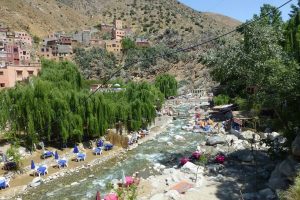
Within reach of Marrakech, the Ourika Valley is popular for river scenery, mountain villages and cooler air. It works well as a day trip, although an overnight stay provides more time to enjoy the landscape beyond the busiest hours.
Aït Bouguemez Valley
Known as the Happy Valley, Aït Bouguemez offers a quieter High Atlas experience of cultivated fields, earthen villages and broad mountain views. It rewards travelers who have time to move beyond the standard Marrakech–desert circuit.
3. The Middle Atlas: Cedar Forests, Lakes and Ifrane
Between northern Morocco and the Sahara routes, the Middle Atlas provides one of the country’s most surprising changes of scenery. Around Azrou, cedar forests create a green, shaded environment very different from the southern desert. Barbary macaques live in parts of these forests; visitors should observe wildlife responsibly and avoid feeding or crowding the animals.
Nearby Ifrane is known for its cool climate, tidy gardens and alpine-influenced architecture. In winter, snow can transform the region. For travelers driving between Fes and Merzouga, the Middle Atlas is much more than a transfer zone: it is a landscape worth slowing down to experience. If this region is part of your route, our Merzouga Sahara Desert Travel Guide explains the scenic Fes–Middle Atlas–Merzouga journey in more detail.

Morocco’s Middle Atlas offers cedar forests and a cooler mountain environment.
4. Morocco’s Atlantic and Mediterranean Coasts
Morocco has long coastlines on both the Atlantic and Mediterranean, creating everything from wide sandy beaches to rocky headlands, lagoons and fishing towns. Coastal landscapes are especially attractive for travelers who want to balance cultural sightseeing with slower days near the sea.
Essaouira
Essaouira combines Atlantic scenery with a historic walled medina and working fishing port. Its exposed coastline is known for wind, making the area popular for wind- and kite-based sports. Long beach walks and ocean sunsets are equally appealing for travelers who prefer a relaxed pace. Continue with our Essaouira Travel Guide for the medina, coast and trip-planning details.

Essaouira adds windswept Atlantic scenery to a Morocco road journey.
Agadir and Taghazout
Agadir offers a broad sandy bay and resort infrastructure, while nearby Taghazout is strongly associated with surfing. Together they provide an accessible base for exploring Morocco’s southern Atlantic coast. For a longer stay on this coast, use our Agadir Travel Guide.
Oualidia and Coastal Lagoons
Oualidia offers a different coastal environment, centered on a sheltered lagoon. Its calm scenery and seafood traditions make it a useful stop for travelers moving between Casablanca, El Jadida, Safi and Essaouira.
The Mediterranean North
Northern Morocco adds Mediterranean coves and mountain-backed coastline to the country’s natural variety. Around Tangier and Tetouan, coastal scenery can be combined with the Rif Mountains, historic medinas and Chefchaouen.
5. Valleys, Gorges and Palm Oases
Some of Morocco’s most photogenic landscapes appear where rivers cut through dry mountains and support ribbons of vegetation. These valleys are central to the overland routes between Marrakech and the Sahara.

Dades Valley combines dramatic rock formations with cultivated landscapes and villages.
Dades Valley
The Dades Valley is known for red-rock formations, cultivated plots, kasbahs and dramatic roads climbing through the gorge. The contrast between rugged cliffs and green valley floor is especially striking in spring. See our Dades Valley Travel Guide for viewpoints, driving advice and nearby stops.
Todra Gorge
Near Tinghir, the Todra Gorge narrows between towering limestone walls. It is a popular stop for walking and photography and also attracts climbers. Visiting earlier or later in the day can make the experience more peaceful. Our Todra Gorge Travel Guide covers the gorge and surrounding Tinghir area in more detail.
Draa Valley
South of Ouarzazate, the Draa Valley follows a long chain of palm groves, villages and kasbahs toward Zagora and M’Hamid. It is one of the best landscapes for understanding the relationship between water, agriculture and settlement in southern Morocco. Travelers continuing through southern Morocco can also consult our Zagora Travel Guide.
6. Waterfalls and Green Escapes
Ouzoud Waterfalls
Ouzoud is among Morocco’s best-known waterfall destinations. Trails descend through olive groves toward viewpoints of the cascades. Conditions and water flow vary by season, so visitors should treat online images as a guide rather than a guarantee of identical scenery year-round.
Paradise Valley
North of Agadir, Paradise Valley is known for rocky canyon scenery and natural pools. Water levels can change considerably with rainfall and season. Check current local conditions before planning swimming or a visit specifically around the pools.
7. The Anti-Atlas: Tafraoute and Granite Landscapes
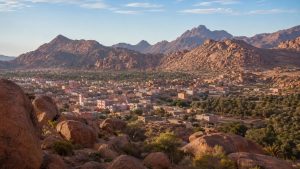
The Anti-Atlas around Tafraoute offers a distinctive world of granite formations, dry valleys, argan country and Amazigh villages. The landscape feels more open and rugged than the High Atlas and fits naturally into a southern loop linking Agadir, Tafraoute and Taroudant. Spring can bring additional color to the valleys, while the region’s rock formations remain impressive throughout the year. For this region, continue with our Tafraoute Travel Guide.
8. Snow in Morocco: A Different Side of North Africa
Winter can bring significant snow to higher elevations of the Atlas and Middle Atlas. Areas around Ifrane and Michlifen are known for winter scenery, while Oukaïmeden in the High Atlas has long been associated with skiing when snow conditions allow. Snowfall varies from year to year, so winter-sports plans should always be based on current conditions rather than fixed expectations.
Best Time to Explore Morocco’s Natural Landscapes
There is no single perfect month for every region. Spring and autumn are generally excellent for mixed itineraries because temperatures are more comfortable across cities, mountains and desert routes. Summer is better suited to Atlantic destinations and higher mountain areas than to intensive Sahara travel in the hottest part of the day. Winter can be beautiful in southern Morocco, but mountain roads and high-altitude hikes require more preparation because of cold, snow and changing conditions.
For a detailed month-by-month overview, read our Best Time to Visit Morocco guide.
How to Combine Coast, Mountains and Desert
A 10-day journey can combine several major environments without excessive rushing. One classic route links Fes with the Middle Atlas, Merzouga, Todra Gorge, Dades Valley, Aït Ben Haddou and Marrakech. Travelers with more time can add Essaouira or extend south toward Agadir, Tafraoute and the Anti-Atlas. The goal should be to choose complementary regions rather than simply collect destinations. For a complete example, see our 10 Day Morocco Itinerary. You can also use our Ouarzazate Travel Guide when planning the transition between the High Atlas, valleys and Sahara routes.
For travelers who want the logistics arranged around their pace, Shade Explore can build a private Morocco itinerary with accommodation, transportation and local experiences selected for the season and route.
Responsible Nature Travel in Morocco For broader conservation and nature context, the Moroccan National Tourist Office overview of Morocco’s national parks is a useful official resource.
Natural areas are most rewarding when they are treated with care. Carry reusable water where practical, avoid leaving waste, respect marked trails and private agricultural land, and do not feed wildlife. In desert and mountain communities, choosing local guides and locally operated accommodation can also keep more tourism value within the region. Weather, water levels and road conditions can change quickly, so local advice is especially important for remote areas.
Morocco Natural Landscapes FAQ
What are the most famous natural landscapes in Morocco?
The Sahara dunes, Atlas Mountains, Atlantic coast, Middle Atlas cedar forests, Dades and Draa valleys, Todra Gorge and the Anti-Atlas are among the country’s most distinctive natural regions.
Can I see the Atlas Mountains and Sahara Desert on the same trip?
Yes. Many multi-day routes connect Marrakech or Fes with the Atlas or Middle Atlas before continuing to Merzouga, Dades, Todra and Ouarzazate.
How many days do I need for a nature-focused Morocco trip?
About 10 days is a useful starting point for combining several regions. Two weeks allows a more relaxed pace and makes it easier to add the Atlantic coast or southern Anti-Atlas.
Does Morocco have snow?
Yes. Higher elevations of the High Atlas and Middle Atlas can receive snow in winter. Conditions vary each season.
Which Moroccan coast is best for a first visit?
The Atlantic coast is especially easy to combine with major itineraries. Essaouira works well from Marrakech, while Agadir and Taghazout suit travelers seeking beaches and surfing.
Is the Sahara suitable year-round?
The desert can be visited in different seasons, but summer heat can be extreme and winter nights can be cold. Spring and autumn generally offer more comfortable conditions.
Conclusion
Morocco’s natural diversity is one of the best reasons to travel beyond a single city. Sahara dunes, mountain passes, cedar forests, Atlantic beaches, palm valleys and rocky gorges can all become part of one well-planned journey. By matching the route to the season and allowing enough time between regions, travelers can experience not just Morocco’s famous landmarks, but the landscapes that connect them.
Discover Morocco with Morocco Shade Explore
At Morocco Shade Explore, we specialize in creating authentic, private, and tailor-made journeys across Morocco.
Our tours include:
- 100% Private & Custom-Made Itineraries
- Luxury Hotels & Authentic Moroccan Riads
- Professional English & French-Speaking Drivers
- Comfortable Air-Conditioned Vehicles
- Private Airport Transfers
- Licensed Local Guides
- Flexible Travel Programs
- 24/7 Local Assistance
- Transparent Pricing with No Hidden Fees
Our most popular Morocco Tours include:
- Grand Tour of Morocco (16–17 Days)
- Grand Tour of Morocco (24–26 Days)
- Luxury Morocco Tours
- Private Morocco Tours
- Customized Morocco Tours
Continue Exploring Morocco
Continue your adventure with our complete collection of Morocco Travel Guides.
- Marrakech Travel Guide
- Rabat Travel Guide
- Casablanca Travel Guide
- Tangier Travel Guide
- Essaouira Travel Guide
- Aït Ben Haddou Travel Guide
- Valley of Roses Travel Guide
- Merzouga & Erg Chebbi Travel Guide
- Chefchaouen Travel Guide
- Fes Travel Guide
- Ouarzazate Travel Guide
- Dades Valley Travel Guide
- Todra Gorge Travel Guide
- Meknes & Volubilis Travel Guide
- Agadir Travel Guide
- Tafraoute Travel Guide
- Taroudant Travel Guide
Together, these guides will help you discover Morocco’s incredible diversity—from Imperial Cities and Roman ruins to the Atlantic coastline, the High Atlas Mountains, and the majestic Sahara Desert.
Start Planning Your Morocco Adventure Today
Ready to discover the timeless beauty of Morocco ?
Whether you’re planning a cultural getaway, a historical tour, or a complete journey across Morocco, Shade Explore is here to create an unforgettable travel experience tailored to your interests.
Contact our travel specialists today to start planning your personalized Morocco itinerary and discover why travelers from around the world choose Morocco Shade Explore for exceptional private tours, authentic experiences, and premium service.