Valley of Roses Travel Guide 2026 | Best Things to Do, Rose Festival & Travel Tips
Introduction
Discover the Beauty of Morocco’s Valley of Roses
Nestled between the dramatic High Atlas Mountains and the gateway to the Sahara Desert, the Valley of Roses is one of Morocco’s most enchanting destinations.
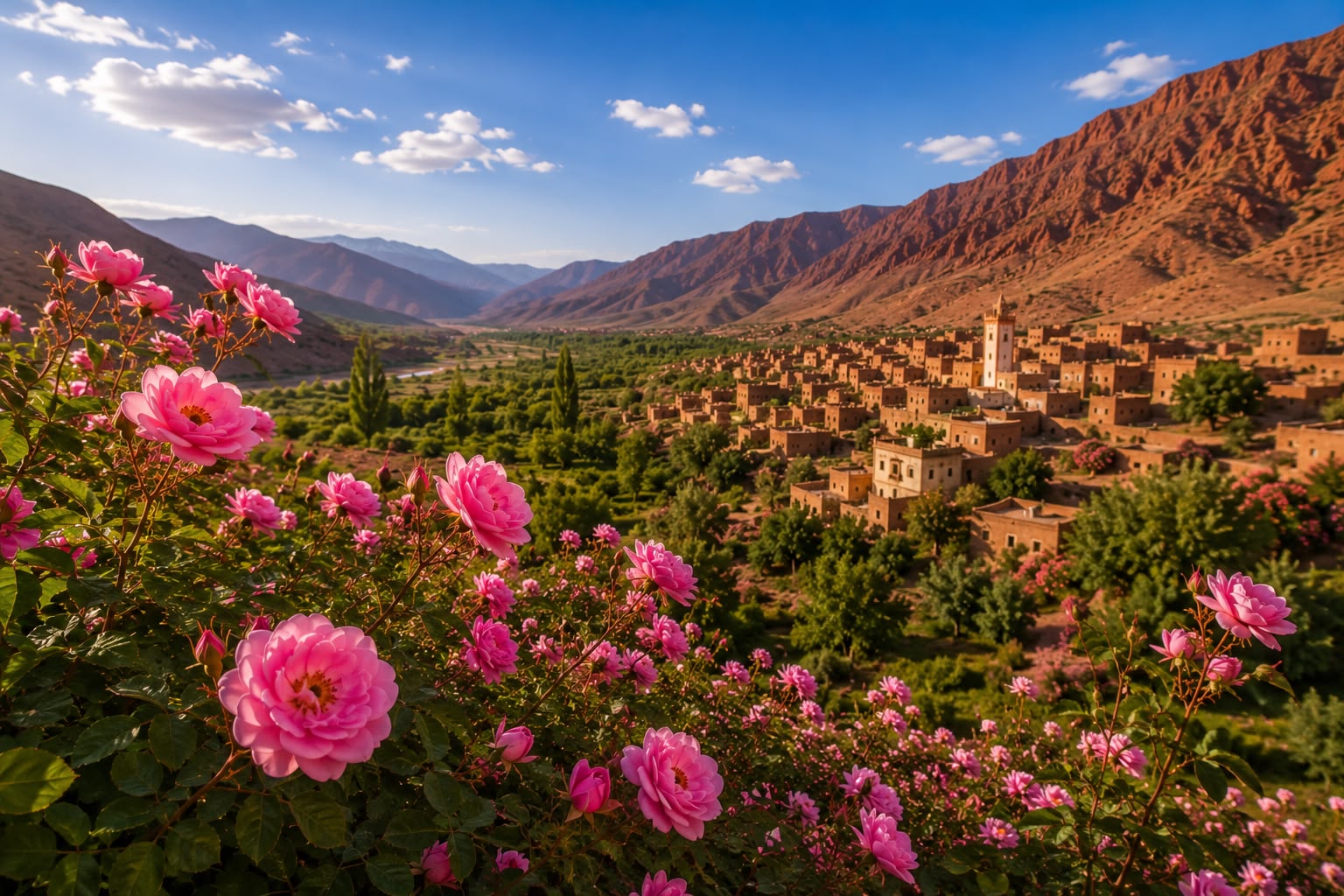
Every spring, thousands of fragrant Damask roses bloom across the valley, transforming the landscape into a spectacular sea of pink. This annual display attracts nature lovers, photographers, hikers, and travelers seeking an authentic Moroccan experience away from the crowds.
This Valley of Roses Travel Guide will help you discover everything you need to plan your visit, from the best attractions and scenic viewpoints to the famous Rose Festival, local cooperatives, traditional Berber villages, and the ideal time to explore this remarkable region.
Whether you are planning a scenic road trip through southern Morocco or a longer cultural adventure, the Valley of Roses offers unforgettable landscapes and genuine hospitality.
Located near Kelaat M’Gouna, the valley is renowned for producing some of the world’s finest rose water, rose oil, cosmetics, and handmade beauty products.
During the annual Rose Festival, visitors can experience traditional music, folklore performances, local crafts, and colorful celebrations that showcase the region’s rich cultural heritage.
The Valley of Roses is also perfectly positioned between several of Morocco’s most iconic destinations. Many travelers combine their visit with the Dades Valley Travel Guide, the spectacular Todra Gorge Travel Guide, the historic Ouarzazate Travel Guide, or the UNESCO-listed Aït Ben Haddou Travel Guide.
Continuing south leads to the breathtaking dunes featured in the Merzouga Travel Guide, while heading west reveals the palm groves highlighted in the Skoura Oasis Travel Guide.
If you are looking for a seamless journey through Morocco’s imperial cities, mountains, valleys, and desert landscapes, our Private Morocco Tours, Luxury Morocco Tours, Morocco Desert Tours, and Grand Tour of Morocco include the Valley of Roses as one of the most scenic highlights of the itinerary.
Each journey is carefully designed to offer authentic cultural experiences, comfortable accommodations, and unforgettable moments across Morocco.
Whether you visit during the blooming season or at another time of year, the Valley of Roses promises breathtaking scenery, welcoming Berber communities, and one of the most picturesque drives in Morocco.
Continue reading this complete Valley of Roses Travel Guide to discover the best things to do, where to stay, how to get there, and expert travel tips for making the most of your visit.
Where Is the Valley of Roses?
The Valley of Roses is located in southern Morocco, in the province of Tinghir, between the High Atlas Mountains and the edge of the Sahara Desert.
Stretching for approximately 30 kilometers (19 miles), the valley follows the M’Goun River and surrounds the town of Kelaat M’Gouna, often called the “Capital of Roses” in Morocco.
Situated along the famous Route of a Thousand Kasbahs, the Valley of Roses is one of the country’s most scenic regions.
Traditional Berber villages, ancient kasbahs, lush palm groves, and fertile gardens contrast beautifully with the surrounding red mountains, creating breathtaking landscapes throughout the year.
Thanks to its strategic location, the valley is an ideal stop on many road trips through southern Morocco.
Travelers often visit it while exploring nearby destinations such as the Dades Valley Travel Guide, the spectacular Todra Gorge Travel Guide, the UNESCO World Heritage Site featured in the Aït Ben Haddou Travel Guide, and the cinematic landscapes described in the Ouarzazate Travel Guide.
Many visitors also continue toward the golden dunes highlighted in the Merzouga Travel Guide.

Map showing the location of the Valley of Roses near Kelaat M’Gouna, between Ouarzazate, Dades Valley, and Todra Gorge in southern Morocco.
Distance from Major Moroccan Cities
Marrakech 330 km / 6–7 hours
Ouarzazate 95 km / 1.5 hours
Dades Valley 25 km / 30 minutes
Todra Gorge 70 km / 1 hour
Merzouga 270 km / 4–5 hours
Fes 470 km / 8–9 hours
Casablanca 560 km / 9–10 hours
Because of its central position between the Atlas Mountains and the Sahara, the Valley of Roses is frequently included in Private Morocco Tours, Luxury Morocco Tours, Morocco Desert Tours, and custom itineraries that combine Morocco’s mountains, valleys, kasbahs, and desert landscapes.
Why Its Location Makes It Special
Unlike many destinations that are known for a single attraction, the Valley of Roses offers a combination of spectacular scenery, authentic Berber culture, and agricultural traditions.
Visitors can drive through peaceful villages, walk among fragrant rose fields, discover family-run cooperatives producing rose-based products, and enjoy panoramic viewpoints overlooking one of Morocco’s most picturesque valleys.
Its location also makes it an excellent base for exploring the surrounding natural wonders, allowing travelers to experience several of southern Morocco’s most iconic destinations within a single journey.
Why Visit the Valley of Roses?
This Valley of Roses Travel guide is one of Morocco’s most beautiful hidden gems, offering a perfect blend of nature, culture, history, and authentic Berber hospitality.
Unlike Morocco’s larger cities or famous desert destinations, the valley provides a peaceful atmosphere where visitors can slow down and experience the country’s traditional way of life.
Each spring, millions of fragrant Damask roses bloom across the valley, covering gardens and fields with vibrant shades of pink.
Their delicate fragrance fills the air, creating one of Morocco’s most unique natural spectacles. This short blooming season makes the Valley of Roses a must-visit destination for photographers, nature lovers, and travelers seeking unforgettable landscapes.
Beyond its famous flowers, the valley is known for its centuries-old agricultural traditions. Local families carefully harvest roses by hand before sunrise and transform them into rose water, essential oils, perfumes, soaps, cosmetics, and natural beauty products using techniques passed down through generations.
Visiting a traditional cooperative offers an excellent opportunity to discover this fascinating craftsmanship while supporting local communities.
The Valley of Roses is also home to picturesque Berber villages, ancient kasbahs, lush gardens, and scenic hiking trails.
Walking through these villages allows visitors to experience authentic Moroccan hospitality, admire traditional adobe architecture, and learn more about the Amazigh culture that has shaped the region for centuries.
Another highlight is the famous Rose Festival, held every May in Kelaat M’Gouna. This colorful celebration features music, traditional dances, local crafts, cultural performances, and the election of the Rose Queen.
It is one of southern Morocco’s most vibrant annual events and attracts visitors from around the world.
Its location also makes the Valley of Roses an ideal stop during a road trip through southern Morocco.
Many travelers combine it with the breathtaking scenery featured in the Dades Valley Travel Guide, the impressive canyons of the Todra Gorge Travel Guide, the historic kasbahs in the Ouarzazate Travel Guide, the UNESCO-listed Aït Ben Haddou Travel Guide, and the spectacular Sahara landscapes presented in the Merzouga Travel Guide.
Whether you are interested in photography, hiking, cultural experiences, local traditions, or simply enjoying one of Morocco’s most scenic drives, the Valley of Roses offers an unforgettable experience that perfectly captures the beauty and diversity of southern Morocco.
Highlights at a Glance
- Admire the spectacular blooming rose fields in spring.
- Visit traditional cooperatives producing rose water and essential oils.
- Experience the famous Rose Festival in Kelaat M’Gouna.
- Explore authentic Berber villages and historic kasbahs.
- Enjoy scenic drives through the High Atlas Mountains.
- Discover local handicrafts and natural cosmetic products.
- Hike through lush valleys surrounded by dramatic mountain landscapes.
- Combine your visit with Dades Valley, Todra Gorge, Ouarzazate, and Merzouga.
History of the Valley of Roses
The history of the Valley of Roses is closely connected to the Amazigh (Berber) communities that have lived in southern Morocco for centuries.
Thanks to the fertile soils nourished by the M’Goun River and the unique climate of the High Atlas Mountains, the valley became an important agricultural region long before it became a tourist destination.
According to local tradition, the famous Damask rose (Rosa damascena) was introduced to the region several centuries ago by pilgrims and traders returning from the Middle East.
The rose adapted remarkably well to the valley’s cool winters, sunny days, and abundant irrigation, gradually becoming one of the area’s most valuable crops.
Over time, local families developed traditional methods for cultivating, harvesting, and distilling roses. Every spring, thousands of villagers gather before sunrise to hand-pick fresh blossoms while they still contain the highest concentration of essential oils.
This ancestral practice continues today and remains an important source of income for many families.
The town of Kelaat M’Gouna gradually became the commercial center of the region, where cooperatives and artisans produce rose water, essential oils, perfumes, soaps, cosmetics, and other natural products using techniques passed down through generations.
Many of these small businesses continue to operate as family-run enterprises, preserving the valley’s cultural identity.
The region is also famous for its impressive collection of kasbahs, fortified villages, and traditional adobe architecture. These historic buildings once protected trade routes that connected the Sahara Desert with Morocco’s imperial cities, serving as important centers for commerce and local life.
In the second half of the 20th century, the Rose Festival was created to celebrate the annual rose harvest and the cultural heritage of the region.
Today, it has become one of Morocco’s most colorful festivals, attracting visitors from around the world who come to enjoy traditional music, Amazigh dances, artisan markets, local cuisine, and the festive atmosphere.
Today, the Valley of Roses remains one of southern Morocco’s most authentic destinations. While tourism has grown steadily, the region has successfully preserved its traditions, agricultural heritage, and warm hospitality, allowing visitors to experience a genuine side of Morocco that has changed very little over the centuries.
Did You Know?
- The Valley of Roses produces several thousand tons of Damask roses during a good harvest season.
- Rose petals are traditionally harvested by hand at sunrise to preserve their fragrance and essential oils.
- Kelaat M’Gouna is widely recognized as Morocco’s capital of roses.
- Many local families have cultivated roses for generations using traditional farming techniques.
- The annual Rose Festival celebrates both the harvest and the Amazigh cultural heritage of the region.
Best Things to Do in the Valley of Roses
The Valley of Roses offers much more than beautiful landscapes. From fragrant rose fields and traditional cooperatives to scenic hiking trails and historic kasbahs, this peaceful valley is filled with authentic experiences that showcase the natural beauty and cultural heritage of southern Morocco.
Here are the best things to do during your visit.
1. Wander Through the Rose Fields
The valley is famous for its vast Damask rose fields, which bloom from late April to mid-May. During this short but magical season, thousands of pink flowers cover the landscape, filling the air with a delicate fragrance.
Walking through the fields early in the morning is one of the most memorable experiences, as local farmers harvest the roses by hand before the sun becomes too strong.
Best for: Photography, nature lovers, couples, and spring travel.
2. Visit a Traditional Rose Cooperative
One of the highlights of any Valley of Roses Travel Guide is discovering the local cooperatives.
Here, you can watch how fresh rose petals are transformed into:
- Rose water
- Essential oils
- Natural perfumes
- Handmade soaps
- Organic cosmetics
- Beauty creams
- Herbal products
Many cooperatives are family-owned and offer demonstrations of the traditional distillation process. Purchasing directly from them also helps support the local community.
3. Explore Kelaat M’Gouna
Known as the Capital of Roses, Kelaat M’Gouna is the cultural heart of the valley.
Take time to stroll through its streets, browse local artisan shops, enjoy a traditional Moroccan café, and discover markets selling handcrafted products made from locally harvested roses.
It is also the perfect place to sample regional cuisine and experience everyday Amazigh life.
4. Attend the Famous Rose Festival
Every May, Kelaat M’Gouna hosts Morocco’s spectacular Rose Festival, celebrating the annual harvest.
Visitors can enjoy:
- Traditional Amazigh music
- Folklore performances
- Colorful parades
- Local handicraft markets
- Rose product exhibitions
- Traditional dancing
- The election of the Rose Queen
The festival offers one of the best opportunities to experience Morocco’s rich cultural traditions.

Visitors and local Amazigh communities celebrate the annual Rose Festival in Kelaat M’Gouna, the heart of Morocco’s famous Valley of Roses.
5. Drive Along the Route of a Thousand Kasbahs
The Valley of Roses lies on the legendary Route of a Thousand Kasbahs, one of Morocco’s most scenic roads.
As you travel through the valley, you will discover:
- Ancient kasbahs
- Traditional mud-brick villages
- Palm groves
- Green oases
- Mountain viewpoints
- Beautiful river valleys
The drive itself is considered one of the highlights of southern Morocco.
6. Visit Historic Kasbahs
Scattered throughout the valley are several impressive kasbahs that reflect Morocco’s rich architectural heritage.
These fortified residences once protected important caravan routes connecting the Sahara with Morocco’s imperial cities.
Many have been restored, while others remain fascinating historical landmarks surrounded by dramatic landscapes.
7. Hike Through Berber Villages
Several walking trails connect traditional Amazigh villages surrounded by rose gardens, orchards, and fertile farmland.
These hikes allow visitors to experience authentic rural Morocco while enjoying spectacular views of the High Atlas Mountains.
Local guides can also introduce visitors to traditional farming techniques and village life
8. Capture Incredible Photography
The Valley of Roses is one of Morocco’s most photogenic destinations.
Some of the best photography spots include:
- Blooming rose fields
- Adobe villages
- Mountain panoramas
- Ancient kasbahs
- The M’Goun River
- Sunrise over the valley
- Sunset across the High Atlas
Photographers will find beautiful compositions throughout the year, especially during spring.
9. Discover Nearby Natural Wonders
Because of its central location, the valley is an excellent base for exploring southern Morocco.
Many travelers continue to the spectacular landscapes featured in the Dades Valley Travel Guide, the towering cliffs of the Todra Gorge Travel Guide, the historic ksar in the Aït Ben Haddou Travel Guide, the cinematic scenery of the Ouarzazate Travel Guide, and the golden dunes highlighted in the Merzouga Travel Guide.
10. Join a Private Morocco Tour
The easiest way to experience the Valley of Roses is through one of our Private Morocco Tours, Luxury Morocco Tours, or Grand Tour of Morocco itineraries.
These journeys combine the valley with Morocco’s imperial cities, mountain passes, kasbahs, palm groves, and the breathtaking Sahara Desert, allowing you to enjoy a seamless travel experience with expert local guides.
Best Day Trips from the Valley of Roses
One of the greatest advantages of visiting the Valley of Roses is its location in the heart of southern Morocco. Surrounded by dramatic mountains, ancient kasbahs, lush oases, and spectacular desert landscapes, the valley serves as an excellent base for exploring some of the country’s most iconic destinations.
Here are the best day trips to include in your itinerary.
1. Dades Valley (25 km | 30 minutes)
The Dades Valley is one of Morocco’s most scenic regions, famous for its winding mountain roads, impressive rock formations, lush valleys, and centuries-old kasbahs.
Don’t miss:
- The famous Tissadrine Hairpin Bends
- Dades Gorge viewpoints
- Traditional Berber villages
- Panoramic hiking trails
- Scenic mountain landscapes
👉 Continue reading our Dades Valley Travel Guide.
2. Todra Gorge (70 km | About 1 hour)
One of Morocco’s most spectacular natural attractions, Todra Gorge features towering limestone cliffs rising more than 300 meters (984 feet) above a crystal-clear river.
Popular activities include:
- Walking through the canyon
- Rock climbing
- Photography
- Visiting nearby Berber villages
- Riverside cafés
👉 Learn more in our Todra Gorge Travel Guide.
3. Ouarzazate (95 km | About 1.5 hours)
Often called the Gateway to the Sahara, Ouarzazate is known for its historic kasbahs, film studios, and beautiful desert scenery.
Highlights include:
- Kasbah Taourirt
- Atlas Film Studios
- Cinema Museum
- Local markets
- Desert landscapes
👉 See our complete Ouarzazate Travel Guide .
4. Aït Ben Haddou (125 km | About 2 hours)
A UNESCO World Heritage Site, Aït Ben Haddou is one of Morocco’s best-preserved fortified villages.
Visitors can:
- Explore the ancient ksar
- Climb to the hilltop viewpoint
- Visit artisan shops
- Learn about traditional earthen architecture
- Discover famous movie locations featured in films and television productions
👉 Continue with our Aït Ben Haddou Travel Guide.
5. Skoura Oasis (55 km | About 1 hour)
The peaceful Skoura Oasis offers a refreshing contrast to the surrounding mountains.
Known for:
- Thousands of palm trees
- Historic kasbahs
- Quiet cycling routes
- Beautiful gardens
- Authentic village life
👉 Discover more in our Skoura Oasis Travel Guide.
6. Merzouga & Erg Chebbi (270 km | 4–5 hours)
If you have more than one day available, continue your journey to Merzouga, home to the majestic Erg Chebbi dunes.
Experiences include:
- Camel trekking
- Luxury desert camps
- 4×4 excursions
- Sandboarding
- Spectacular sunrise and sunset over the dunes
- Traditional Amazigh and Gnawa music
👉 Plan your visit with our Merzouga Travel Guide.
Make the Most of Your Journey
Many travelers include the Valley of Roses as part of a longer itinerary through southern Morocco.
Our Private Morocco Tours, Luxury Morocco Tours, Morocco Desert Tours, and Grand Tour of Morocco are carefully designed to combine these remarkable destinations into one unforgettable journey, allowing you to experience Morocco’s mountains, valleys, kasbahs, oases, and the Sahara Desert without the stress of planning every detail.
🌸 Best Time to Visit the Valley of Roses
The Valley of Roses is a year-round destination, but each season offers a different experience. Whether you want to witness the famous rose bloom, enjoy pleasant hiking weather, or discover traditional Amazigh culture, choosing the right season will help you make the most of your trip.
🌹 Spring (April to May) — The Best Time to Visit
Spring is undoubtedly the best season to experience the Valley of Roses. During late April and early May, millions of Damask roses bloom across the valley, creating breathtaking pink landscapes and filling the air with their delicate fragrance.
This is also the time when local families harvest the roses by hand before sunrise, following traditions that have been passed down for generations.
If possible, plan your visit to coincide with the Rose Festival in Kelaat M’Gouna, usually held in early or mid-May.
The festival celebrates the annual harvest with music, traditional dances, artisan markets, cultural performances, and local food.
Average temperatures:
* Day: 20–28°C (68–82°F)
* Night: 8–15°C (46–59°F)
Ideal for:
* Rose fields
* Photography
* Cultural events
* Scenic drives
* Nature lovers
☀️ Summer (June to August)
Summer brings warm and sunny weather. Although the rose blooming season has ended, the valley remains green thanks to the M’Goun River and surrounding gardens.
Temperatures can become quite hot during the afternoon, so outdoor activities are best enjoyed early in the morning or later in the evening.
Average temperatures:
* Day: 30–38°C (86–100°F)
* Night: 18–24°C (64–75°F)
Ideal for:
* Road trips
* Visiting kasbahs
* Exploring Berber villages
* Local markets
🍂 Autumn (September to November)
Autumn is another excellent time to visit. The weather is comfortable, the landscapes remain beautiful, and there are fewer visitors than during the spring season.
This is one of the best periods for travelers exploring southern Morocco, especially those combining the valley with the Dades Valley Travel Guide, Todra Gorge Travel Guide, Ouarzazate Travel Guide, and the Sahara Desert.
Average temperatures:
* Day: 20–30°C (68–86°F)
* Night: 10–18°C (50–64°F)
Ideal for:
* Hiking
* Scenic drives
* Photography
* Multi-day tours
❄️ Winter (December to March)
Winter is generally mild during the day, while nights can be cold, especially in the surrounding mountains.
Although there are no blooming roses, winter offers peaceful landscapes, clear skies, and a quieter atmosphere. Snow can often be seen on the nearby High Atlas peaks, creating a beautiful contrast with the valley below.
Average temperatures:
* Day: 12–20°C (54–68°F)
* Night: 2–8°C (36–46°F)
Ideal for:
* Peaceful sightseeing
* Photography
* Authentic cultural experiences
* Travelers seeking fewer crowds
🌟 Our Recommendation
If your goal is to experience the valley at its most spectacular, late April through mid-May is the ideal time to visit. However, September and October are also excellent choices thanks to their pleasant weather and quieter atmosphere.
Before your trip, we recommend checking the latest weather forecast on AccuWeather to help you plan your activities and road conditions.
Many of our Private Morocco Tours, Luxury Morocco Tours, and Grand Tour of Morocco are scheduled during these seasons to offer the best travel conditions while combining the Valley of Roses with destinations such as Dades Valley, Todra Gorge, Aït Ben Haddou, Ouarzazate, and Merzouga.
🚗 How to Get to the Valley of Roses
Reaching the Valley of Roses is part of the adventure. Located in southern Morocco near Kelaat M’Gouna, the valley is easily accessible by road and is one of the highlights of the famous Route of a Thousand Kasbahs.
Whether you are driving yourself, joining a guided tour, or hiring a private driver, the journey offers spectacular scenery through the High Atlas Mountains, traditional Berber villages, and lush river valleys.
🚙 By Car (Recommended)
Renting a car is the best way to explore the Valley of Roses and the surrounding region at your own pace.
The roads are well-maintained, and the drive is filled with breathtaking viewpoints, kasbahs, palm groves, and mountain landscapes.
Having your own vehicle also allows you to stop at local cooperatives, scenic overlooks, and small villages that are often missed by larger tour groups.
Driving is especially convenient if you plan to continue your journey toward the Dades Valley, Todra Gorge, Ouarzazate, or the Sahara Desert.
🚐 By Private Tour
For a stress-free experience, many travelers choose one of our Private Morocco Tours, Luxury Morocco Tours, or Morocco Desert Tours.
Traveling with a private driver and local guide allows you to fully enjoy the scenery without worrying about navigation, parking, or planning accommodations.
Most itineraries include comfortable transportation, carefully selected hotels or riads, and visits to the region’s main attractions.
This is the most popular option for couples, families, and travelers looking for a personalized experience.
🚌 By Bus
Several national bus companies connect major Moroccan cities with nearby towns such as Ouarzazate and Kelaat M’Gouna.
While buses are an affordable option, schedules may be limited, and you will likely need a taxi to reach your accommodation or explore the valley itself.
This option is best suited for budget-conscious travelers who are comfortable using public transportation.
✈️ Nearest Airports
The closest airports to the Valley of Roses are:
Ouarzazate Airport (OZZ) : 95 km / About 1.5 hours
Marrakech Menara Airport (RAK) : 330 km / About 6–7 hours
Errachidia Moulay Ali Cherif Airport (ERH) : 250 km / About 4 hours
Many international visitors arrive in Marrakech before beginning a scenic road trip through the High Atlas Mountains toward southern Morocco.
🗺️ Suggested Road Trip Itinerary
One of the most popular routes is:
Marrakech → Aït Ben Haddou → Ouarzazate → Skoura Oasis → Valley of Roses → Dades Valley → Todra Gorge → Merzouga Desert
This itinerary combines Morocco’s most spectacular mountain scenery, ancient kasbahs, lush valleys, and the breathtaking Sahara Desert.
For travelers with more time, the journey can continue to Fes, Chefchaouen, Rabat, and Casablanca, creating an unforgettable Grand Tour of Morocco.
💡 Travel Tips
- Start long drives early in the morning to enjoy cooler temperatures and better lighting for photography.
- Fill up your fuel tank before leaving larger towns such as Ouarzazate or Tinghir.
- Keep some cash for local markets, cooperatives, and small cafés, as card payments may not always be accepted.
- Drive carefully through mountain roads and villages where livestock and pedestrians may share the road.
- Allow extra time for scenic stops—you will find plenty of incredible viewpoints along the way. Before you travel, you can plan your route using Google Maps to estimate driving times and discover nearby attractions.
🏨 Where to Stay in the Valley of Roses
According to this Valley of Roses Travel Guide, Kelaat M’Gouna is the best place to stay.Choosing the right accommodation can make your visit to the Valley of Roses even more memorable.
Whether you are looking for a luxury kasbah, a charming riad, or a family-run guesthouse, the region offers a variety of places to stay while enjoying its breathtaking landscapes and warm Amazigh hospitality.
Most accommodations are located in and around Kelaat M’Gouna, making it easy to explore the valley, visit local cooperatives, and continue your journey toward the Dades Valley, Todra Gorge, Ouarzazate, or the Sahara Desert.
⭐ Luxury Hotels & Kasbahs
If you’re looking for comfort and authentic Moroccan architecture, several luxury kasbahs offer beautifully decorated rooms, panoramic terraces, swimming pools, traditional cuisine, and exceptional service.
Luxury accommodations often include:
* Spacious rooms and suites
* Swimming pool
* Garden terraces
* Traditional Moroccan cuisine
* Mountain views
* Free parking
* Guided excursion services
These properties are ideal for couples, honeymooners, and travelers seeking a premium experience.
🏡 Traditional Riads & Guesthouses
For a more authentic stay, consider a traditional riad or guesthouse managed by local families.
These accommodations provide a warm atmosphere and allow visitors to experience genuine Moroccan hospitality while enjoying homemade meals prepared with fresh local ingredients.
Many guesthouses also organize:
* Village walks
* Hiking excursions
* Cooking classes
* Visits to local cooperatives
* Cultural experiences with Amazigh families
💰 Budget-Friendly Options
Backpackers and budget travelers will also find affordable hotels and simple guesthouses offering clean, comfortable rooms and excellent value.
Most include:
* Private bathrooms
* Free Wi-Fi
* Breakfast
* Parking
* Friendly local advice
Although more modest, these accommodations provide an excellent base for exploring the region.
📍 Best Areas to Stay
Kelaat M’Gouna
The most convenient location for first-time visitors.
You’ll be close to:
* Rose cooperatives
* Restaurants
* Local markets
* The annual Rose Festival
* Banks and services
Along the Valley
Several charming eco-lodges and boutique guesthouses are located directly within the valley, surrounded by rose gardens, orchards, and traditional villages.
These peaceful settings are perfect for travelers seeking nature and tranquility.
🌅 Why Spend at Least One Night?
Although some visitors pass through the Valley of Roses in just a few hours, staying overnight allows you to experience the destination at its best.
Early mornings offer soft light over the rose fields, while evenings provide spectacular sunsets across the High Atlas Mountains. Spending the night also gives you more time to visit local cooperatives, enjoy traditional Moroccan cuisine, and discover the relaxed rhythm of village life away from the daytime traffic.
🌟 Travel with Shade Explore
Our Private Morocco Tours, Luxury Morocco Tours, and Grand Tour of Morocco include carefully selected accommodations in the Valley of Roses. We prioritize comfort, authenticity, excellent service, and strategic locations, ensuring that every overnight stay becomes an unforgettable part of your Moroccan journey.
🍽️ What to Eat in the Valley of Roses
A visit to the Valley of Roses is not complete without tasting the traditional cuisine of southern Morocco. Influenced by Amazigh heritage and local farming traditions, the region offers simple yet flavorful dishes prepared with fresh ingredients, aromatic herbs, locally grown vegetables, and high-quality olive oil.
Whether you dine in a traditional guesthouse, a family-run restaurant, or a charming kasbah, you’ll discover authentic Moroccan flavors that perfectly complement the beauty of the valley.
🥘 Taste a Traditional Moroccan Tagine
Tagine is the signature dish of Morocco and one of the most popular meals in the Valley of Roses.
Local restaurants prepare a variety of tagines, including:
* Chicken with preserved lemons and olives
* Lamb with prunes and almonds
* Beef with seasonal vegetables
* Vegetable tagine
* Kefta (meatball) tagine with eggs and tomatoes
Cooked slowly in traditional clay pots, these dishes are rich in flavor and reflect generations of culinary tradition.
🍲 Enjoy Authentic Berber Couscous
Couscous is traditionally served every Friday but is available throughout the week in many restaurants and guesthouses.
Prepared with steamed semolina, fresh vegetables, and tender meat, it is one of Morocco’s most beloved comfort foods and an essential culinary experience for visitors.
🍢 Try Local Grilled Specialties
Many cafés and restaurants serve freshly grilled meats prepared over charcoal.
Popular choices include:
* Lamb skewers
* Chicken brochettes
* Grilled beef
* Merguez sausages
* Seasonal vegetables
These dishes are often accompanied by fresh Moroccan bread and colorful salads.
🫓 Fresh Moroccan Bread
Bread is served with almost every meal.
In the Valley of Roses, many families still bake traditional bread in community ovens, giving it a unique texture and flavor.
Fresh bread is commonly enjoyed with:
* Olive oil
* Local honey
* Homemade butter
* Soft cheeses
* Traditional jams
🌹 Discover Rose-Inspired Specialties
As Morocco’s famous rose-growing region, the Valley of Roses also offers unique products made from locally harvested Damask roses.
Depending on the season and the producer, you may find:
* Rose tea
* Rose-infused pastries
* Rose jam
* Rose syrup
* Rose-flavored desserts
* Fresh rose water used in traditional sweets
These delicacies provide a distinctive taste that reflects the valley’s agricultural heritage.
🍵 Don’t Miss Moroccan Mint Tea
No visit to Morocco is complete without enjoying a glass of traditional mint tea.
Prepared with green tea, fresh mint leaves, and sugar, it is served throughout the day as a symbol of hospitality and friendship.
Many panoramic cafés overlooking the valley offer the perfect setting to relax while enjoying this iconic Moroccan drink.
🍊 Fresh Seasonal Fruits
Thanks to its fertile soil and mild climate, the Valley of Roses produces a variety of fresh fruits throughout the year.
Depending on the season, you may enjoy:
* Apples
* Apricots
* Figs
* Pomegranates
* Dates
* Almonds
* Walnuts
These locally grown products are often sold at roadside markets and village shops.
🌟 A Culinary Experience Included in Our Tours
Many of our Private Morocco Tours, Luxury Morocco Tours, and Grand Tour of Morocco include carefully selected restaurants and authentic guesthouses where travelers can enjoy the best regional cuisine while discovering the traditions and hospitality of southern Morocco.
Dining in the Valley of Roses is more than just a meal—it’s an opportunity to experience the culture, history, and generosity of the local Amazigh communities.
💡 Practical Travel Tips for Visiting the Valley of Roses
A little preparation can make your visit to the Valley of Roses even more enjoyable. These practical tips will help you experience the region comfortably while respecting local traditions and making the most of your journey through southern Morocco.
🌸 Visit During the Rose Bloom if Possible
If your schedule allows, plan your trip between late April and mid-May, when the Damask roses are in full bloom. This is the most beautiful time of the year, with fragrant fields stretching across the valley and the famous Rose Festival taking place in Kelaat M’Gouna.
If you travel outside the blooming season, don’t worry—the valley remains an attractive destination thanks to its mountain scenery, traditional villages, and peaceful atmosphere.
👟 Wear Comfortable Walking Shoes
Although many attractions are accessible by car, you’ll likely spend time walking through villages, gardens, cooperatives, and scenic viewpoints.
Comfortable walking shoes with good grip are recommended, especially if you plan to hike or explore unpaved paths.
🧥 Dress for Changing Temperatures
The Valley of Roses experiences significant temperature changes between day and night.
We recommend bringing:
* Lightweight clothing for daytime
* A light jacket or fleece for evenings
* A hat for sun protection
* Sunglasses
* Sunscreen
Spring and autumn generally offer the most pleasant weather.
💵 Carry Some Cash
While hotels and larger businesses may accept credit cards, many small shops, cooperatives, cafés, and local markets operate on a cash-only basis.
Having Moroccan Dirhams (MAD) on hand will make small purchases much easier.
📸 Respect Local Communities
The Valley of Roses is home to welcoming Amazigh communities who are proud of their traditions.
Before photographing people, especially in villages or during the rose harvest, always ask for permission. A friendly greeting and respectful attitude are greatly appreciated and often lead to meaningful cultural exchanges.
🌹 Buy Authentic Rose Products
This Valley of Roses Travel Guide recommends carrying cash when visiting local cooperative.
When shopping for rose water, essential oils, soaps, or cosmetics, choose products from reputable local cooperatives whenever possible.
Authentic handmade products are generally of higher quality and your purchase directly supports local families and artisans.
🚗 Allow Extra Time for Scenic Stops
The road through the Valley of Roses is one of the most scenic in southern Morocco.
You’ll encounter countless panoramic viewpoints, traditional kasbahs, rose gardens, and charming villages. Don’t rush your journey—leave enough time to stop, take photographs, and simply enjoy the landscape.
♻️ Travel Responsibly
Help preserve the natural beauty of the Valley of Roses by following a few simple principles:
* Do not leave litter behind.
* Stay on marked paths when hiking.
* Respect agricultural fields and private property.
* Support local businesses and artisans.
* Conserve water, especially during the warmer months.
Responsible tourism helps protect this remarkable region for future generations.
🌟 Explore the Valley with Local Experts
For a richer and more relaxing experience, consider joining one of our Private Morocco Tours, Luxury Morocco Tours, or Custom Morocco Tours.
Our experienced local guides share the history, traditions, and hidden gems of the Valley of Roses while taking care of transportation, accommodations, and every detail of your journey.
❓ Frequently Asked Questions About the Valley of Roses
1. Where is the Valley of Roses located?
The Valley of Roses is located in southern Morocco near the town of Kelaat M’Gouna, between Ouarzazate and Boumalne Dades along the famous Route of a Thousand Kasbahs. It is one of the most scenic stops on a journey through the High Atlas Mountains and toward the Sahara Desert.
2. What is the best time to visit the Valley of Roses?
The best time to visit is late April through mid-May, when the Damask roses are in full bloom and the annual Rose Festival takes place. Spring offers pleasant temperatures, vibrant landscapes, and the valley’s most spectacular scenery.
3. How many days should I spend in the Valley of Roses?
Most travelers spend one night in the Valley of Roses, which allows enough time to visit the rose fields, explore Kelaat M’Gouna, discover local cooperatives, and enjoy the surrounding landscapes. If you enjoy hiking or photography, staying two nights is highly recommended.
4. Is the Valley of Roses worth visiting?
Absolutely. The Valley of Roses is one of Morocco’s hidden gems, offering beautiful mountain scenery, authentic Amazigh culture, fragrant rose fields, traditional kasbahs, and peaceful villages. It is an ideal destination for nature lovers, photographers, and anyone seeking a more authentic side of Morocco.
5. Can I visit the Valley of Roses on a day trip?
Yes, but an overnight stay is recommended. While it is possible to visit in a single day from nearby destinations such as Ouarzazate or the Dades Valley, spending the night allows you to experience the valley at a more relaxed pace and enjoy sunrise or sunset over the surrounding mountains.
6. What is the Rose Festival?
The Rose Festival is an annual celebration held in Kelaat M’Gouna every May to mark the rose harvest. Visitors can enjoy traditional Amazigh music, cultural performances, local handicrafts, food stalls, parades, and exhibitions of rose-based products.
7. What products can I buy in the Valley of Roses?
The valley is famous for its handmade products, including:
- Rose water
- Essential oils
- Natural soaps
- Perfumes
- Cosmetics
- Beauty creams
- Rose-infused food products
- Handmade crafts
Buying directly from local cooperatives helps support the region’s artisans and farming communities.
8. Is the Valley of Roses suitable for families?
Yes. Families can enjoy scenic drives, gentle walks through the valley, visits to traditional villages, local markets, and educational experiences at rose cooperatives. The peaceful atmosphere makes it a wonderful destination for travelers of all ages.
9. Can I combine the Valley of Roses with other destinations?
Definitely. Many travelers combine the Valley of Roses with the Dades Valley Travel Guide, Todra Gorge Travel Guide, Ouarzazate Travel Guide, Aït Ben Haddou Travel Guide, and the Merzouga Travel Guide as part of a road trip through southern Morocco.
10. How can I visit the Valley of Roses with Shade Explore?
Our Private Morocco Tours, Luxury Morocco Tours, Morocco Desert Tours, and Grand Tour of Morocco include the Valley of Roses as one of the highlights of the itinerary.
We provide private transportation, carefully selected accommodations, knowledgeable local guides, and personalized itineraries to ensure an unforgettable Moroccan adventure.
Conclusion
🌹 Valley of Roses Travel Guide: A Journey Through Morocco’s Most Fragrant Landscape
The Valley of Roses is one of Morocco’s most enchanting destinations, where breathtaking landscapes, rich Amazigh traditions, and centuries-old rose cultivation come together to create an unforgettable travel experience.
From the fragrant rose fields surrounding Kelaat M’Gouna to the historic kasbahs, scenic mountain roads, and welcoming local communities, every moment spent in the valley reveals a different side of authentic Morocco.
Whether you’re visiting during the spectacular spring bloom, attending the vibrant Rose Festival, exploring traditional cooperatives, or simply enjoying the peaceful beauty of the High Atlas foothills, the Valley of Roses offers memories that will stay with you long after your journey ends.
Its strategic location also makes it one of the best stops on any southern Morocco itinerary.
We hope this Valley of Roses Travel Guide helps you plan an unforgettable trip to southern Morocco.
Many travelers combine the valley with the dramatic scenery of the Dades Valley Travel Guide, the towering cliffs featured in the Todra Gorge Travel Guide, the historic sites of the Ouarzazate Travel Guide, the UNESCO-listed Aït Ben Haddou Travel Guide, and the golden dunes showcased in the Merzouga Travel Guide.
🚙Discover Roses Valley with Morocco Shade Explore
At Morocco Shade Explore, we specialize in creating authentic, private, and tailor-made journeys across Morocco.
Our tours include:
- 100% Private & Custom-Made Itineraries
- Luxury Hotels & Authentic Moroccan Riads
- Professional English & French-Speaking Drivers
- Comfortable Air-Conditioned Vehicles
- Private Airport Transfers
- Licensed Local Guides
- Flexible Travel Programs
- 24/7 Local Assistance
- Transparent Pricing with No Hidden Fees
Our most popularGuarented departures include:
- Grand Tour of Morocco (16–17 Days)
- Grand Tour of Morocco (24–26 Days)
- Luxury Morocco Tours
- Private Morocco Tours
- Customized Morocco Tours
We hope this Taroudante Travel Guide helps you plan an unforgettable journey through southern Morocco.
🌍Continue Exploring Morocco
Continue your adventure with our complete collection of Morocco Travel Guides.
- Marrakech Travel Guide
- Rabat Travel Guide
- Casablanca Travel Guide
- Tangier Travel Guide
- Essaouira Travel Guide
- Aït Ben Haddou Travel Guide
- Valley of Roses Travel Guide
- Merzouga & Erg Chebbi Travel Guide
- Chefchaouen Travel Guide
- Fes Travel Guide
- Ouarzazate Travel Guide
- Dades Valley Travel Guide
- Todra Gorge Travel Guide
- Meknes & Volubilis Travel Guide
- Agadir Travel Guide
- Tafraoute Travel Guide
- Taroudant Travel Guide
- Zagora Travel Guide
Together, these guides will help you discover Morocco’s incredible diversity—from Imperial Cities and Roman ruins to the Atlantic coastline, the High Atlas Mountains, and the majestic Sahara Desert.
Start Planning Your Morocco Adventure Today
Ready to discover the timeless beauty of Roses Valley ?
Whether you’re planning a cultural getaway, a historical tour, or a complete journey across Morocco, Shade Explore is here to create an unforgettable travel experience tailored to your interests.
Contact our travel specialists today to start planning your personalized Morocco itinerary and discover why travelers from around the world choose Morocco Shade Explore for exceptional private tours, authentic experiences, and premium service.